
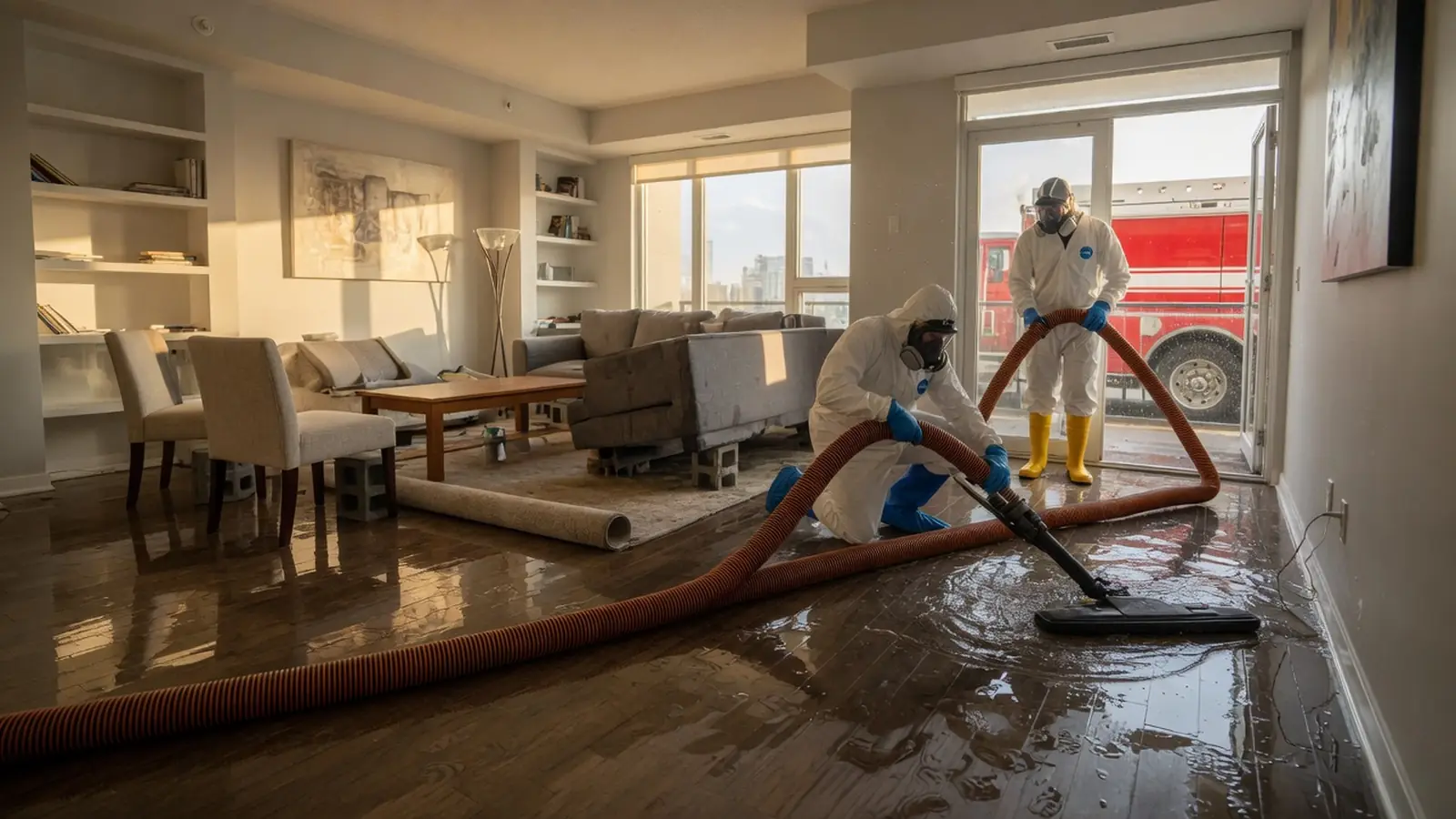
Emergency Water Damage Restoration Concord CA
Atmospheric river events in winter deliver concentrated rainfall across the region that frequently overwhelms exterior perimeter drains and drives surface water through low-lying entryways. Immediate emergency response following water intrusion is essential to arrest progressive structural saturation and secondary mold growth. Our field technicians stabilize compromised structures rapidly to safeguard your property.
Call (925) 555-0159 when you find water where it shouldn't be.
Restoring Local Properties After Water Intrusion
About 27% of housing units locally (12,493 of 46,745) were built before 1960, the era of galvanized steel supply lines and cast iron drains.
About 23% of housing units in the area (10,587 of 46,745) were built in the 1960s, overlapping the years aluminium branch wiring was installed.
About 38% of housing units across the valley (17,756 of 46,745) were built in the 1970s and 1980s, overlapping the years polybutylene supply piping was commonly installed.
About 87% of housing units locally (40,836 of 46,745) were built before 1980, the period when asbestos-containing materials and lead paint were still in use.
When older plumbing ruptures, homeowners often describe how elevated crawl space humidity causes subfloor fiberglass batt insulation to absorb water, become heavy, and collapse.
Adhering to IICRC-certified multi-stage restoration protocols ensures systematic containment, flood cleanup, and thorough moisture extraction.
Our trained mitigation technicians deploy specialized moisture meters to track moisture migration through concealed wall cavities.
Property owners can learn how our technicians mitigate severe storm damage before structural rot develops.
Step-by-Step Structural Moisture Removal
We execute systematic water extraction and structural drying to halt building degradation. A pattern echoed in public discussions is that heavy rainfall causes standing water to pool beneath crawl space vapor barriers, raising concerns about moisture buildup and joist rot.
- Emergency Assessment And Hazard Containment. Technicians inspect framing and utilities, keeping in mind that older buildings require careful safety measures for wiring and legacy building materials during structural water removal.
- Rapid Water Extraction And Pumping. Our crew removes pooled surface runoff and trapped moisture using commercial submersible pumps and truck-mounted vacuum units to eliminate standing water immediately.
- Industrial Structural Drying And Dehumidification. We place commercial centrifugal air movers and low-grain refrigerant dehumidifiers to extract moisture from subfloors, wall cavities, and framing assemblies.
- Antimicrobial Treatment And Moisture Verification. We apply EPA-registered antimicrobials and monitor deep structural moisture pins to ensure every wet assembly returns to dry standards.
Scientific Moisture Extraction
Our structural approach accounts for regional terrain and soil moisture dynamics. The dominant mapped soils in the district (CA013) by acreage are Los Osos clay loam, 30 to 50 percent slopes; Altamont-Fontana complex, 30 to 50 percent slopes; Clear Lake clay, 0 to 15 percent slopes, MLRA 15; Los Gatos loam, 30 to 50 percent slopes. In fact, the single most extensive soil unit mapped around the area is Los Osos clay loam, 30 to 50 percent slopes, covering about 31,805 acres of CA013. When saturated hillslopes channel hydrostatic pressure against footings, you can review our specialized protocols for clearing crawl space water safely.
Structural Water Extraction
We deploy commercial extraction equipment to extract floodwaters and pipe bursts before moisture penetrates subflooring and wall framing.
Crawl Space Moisture Mitigation
Our team removes standing water from foundation subgrades and installs commercial drying systems to prevent structural timber rot.
Storm Intrusion Stabilization
We extract storm runoff from low entryways and dry structural materials following heavy winter atmospheric river events.
Targeted Weather Resilience And Restoration Standards
NOAA radar recorded 0 hail signatures within about 15 miles locally between 2021-2025 (2021: 0, 2022: 0, 2023: 0, 2024: 0, 2025: 0). In fact, the heaviest recent hail year around the regional radius was 2021, with 0 radar hail signatures inside a 15-mile radius. Because hail damage is non-existent, local structural flooding stems primarily from intense winter atmospheric downpours and residential plumbing failures, which our drying equipment is calibrated to resolve.
- 8Zip Codes Served
- 6Service Areas
- 3Services Offered
Local property owners rely on our emergency drying crews when severe water intrusions threaten structural integrity. Here is direct feedback from homeowners regarding our mitigation process, communication, and field workmanship.
“During our sudden subfloor flood, the crew knew exactly how to coordinate containment protocols around our older wiring and passed the municipal safety check on the first walk-through. They documented all the moisture meter readings for our adjuster without any pushback. That thoroughness prevented unnecessary teardowns and kept our restoration claim fully on track.”
Marcus G.
“Every single morning at eight, the team sent timestamped photos and psychrometric chamber logs straight to my smartphone. I never had to hunt anyone down to find out which drying units were moving or what our moisture levels looked like. That level of clear communication gave our family total peace of mind throughout a stressful week.”
Elena V.
“Instead of ripping out all our solid oak hardwood after the line split, the crew explained how directed warm-air injection mats could salvage the planking without replacement. Their practical advice saved us thousands in lumber costs while restoring the wood to baseline moisture levels. The floors settled back down flat without cupping.”
Julian T.
“A ferocious winter downpour flooded our narrow sloped access driveway, but the team staged portable extractors on foot and kept their drying targets completely on schedule. They adjusted the airflow ducts inside our crawl space immediately to prevent water pooling near the sills. Their rapid recovery kept our subfloor joists completely free of mold.”
Danielle K.
Frequently Asked Questions
Can interior structural drying start before emergency roof tarping and exterior water diversion are secured during an active rainstorm?
Interior structural drying cannot effectively begin until all active exterior water intrusion and roof leaks are completely stabilized. Attempting to dry interior building materials while stormwater continues entering wall cavities or ceilings wastes equipment output and accelerates structural saturation. Our initial priority during severe weather is securing temporary roof tarps and diverting ground runoff away from foundations before running structural dehumidifiers.
How quickly does structural drying equipment need to be installed?
Industrial extraction and drying equipment should be installed within twenty-four hours to prevent secondary structural mold growth. Rapid extraction within the first day arrests microbial growth and stops water from wicking higher into drywall, insulation, and framing timbers.
Does insurance cover emergency structural water extraction?
Most standard homeowner policies cover sudden and accidental pipe breaks but require prompt mitigation to prevent claim denials. Insurers mandate that property owners take immediate steps to prevent secondary damage, which makes certified drying logs and moisture mapping documentation essential for claim approval.
How long does the structural drying process typically take?
Thorough structural drying typically requires three to five days depending on material saturation levels and building airflow. Technicians monitor daily psychrometric readings and adjust industrial air movers and desiccant dehumidifiers until framing pins confirm moisture levels have returned to standard dry baselines.
What hazards must technicians monitor in pre-1980 homes?
Technicians in older homes must verify asbestos and lead paint risks before disturbing drywall, vinyl flooring, or textured ceilings. Because approximately eighty-seven percent of local properties were constructed prior to 1980, non-destructive moisture extraction and controlled drying prevent the hazardous disturbance of regulated legacy building materials.