
Concord Storm Damage
When seasonal deluges strike the Diablo Valley, storm-driven wind and rain penetrate damaged roof flashing, saturating attic sheetrock and causing ceilings to sag and drip. Storm floodwater entering from exterior runoff is treated as Category 3 black water, requiring immediate removal of porous drywall and subflooring rather than in-place drying. Our emergency crew deploys industrial extraction equipment to secure your home before secondary mold spreads.
Call (925) 555-0159 if water is dripping now.
Decades Of Regional Storm Restoration Experience
Our technicians provide dedicated emergency water damage restoration across the East Bay to protect residential properties from torrential storm runoffs.
A frequent pattern echoed in public discussions is that negative yard grading and improper downspout discharge force rainwater to seep through concrete block foundation walls into crawl spaces.
Local homeowners often describe how seasonal high groundwater tables push water upward through dirt crawl space floors, overwhelming interior perimeter drainage systems.
Properties situated near Ygnacio Valley and the clay soil slopes of Mount Diablo routinely face severe hydrostatic pressure during atmospheric river events.
Our crew thoroughly evaluates foundation footings and subfloor framing using calibrated thermal imaging moisture meters.
Our Rapid Storm Water Mitigation Process
When flash flooding impacts living spaces, homeowners dealing with indoor storm runoff face uncertainty regarding the necessity of two-foot flood cuts to dry saturated wall assemblies, so our certified technicians guide you through each strategic mitigation phase.
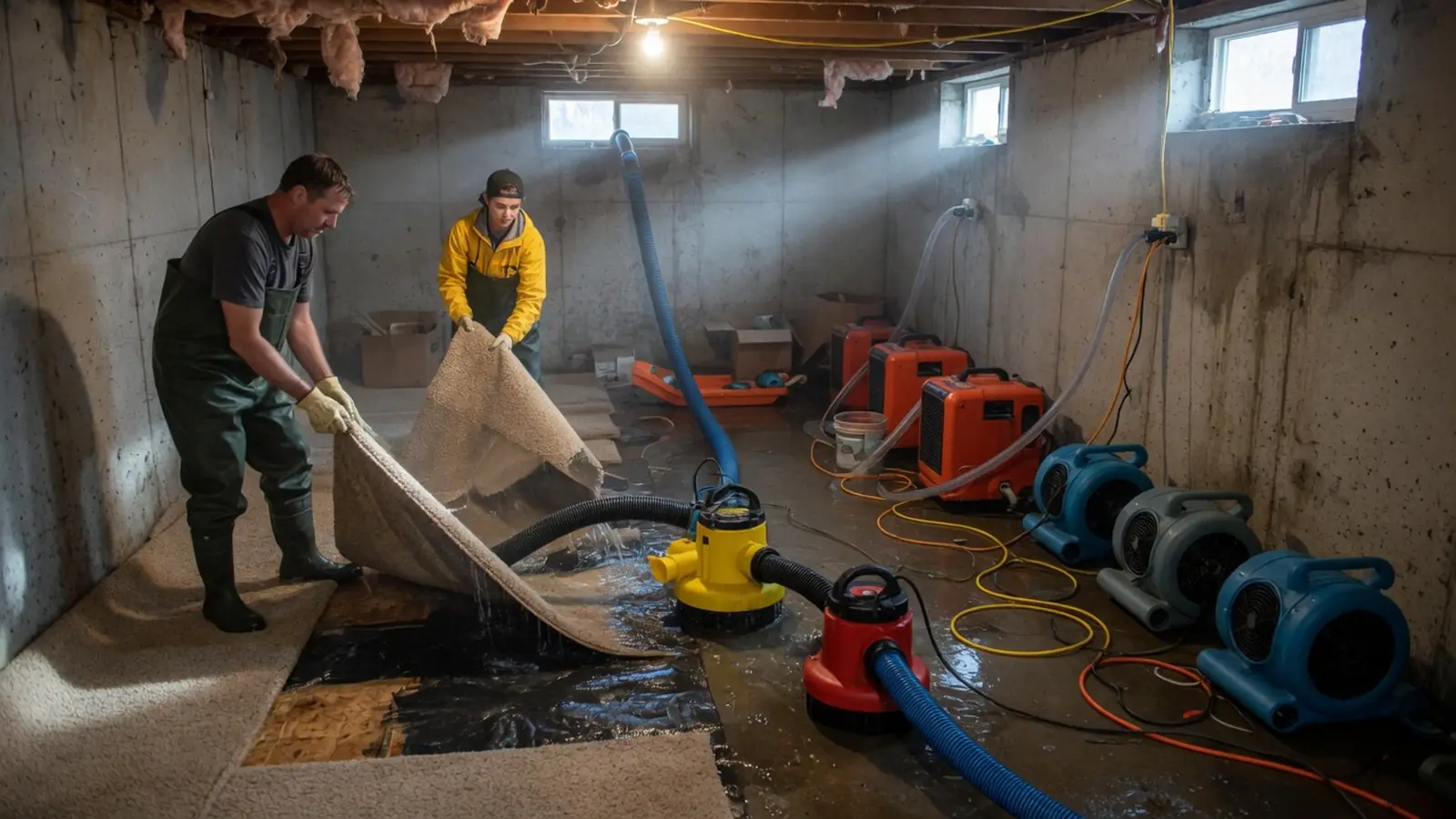
- Emergency Site Containment. Severe storms causing extended power outages disable primary sump pumps, allowing floodwater to submerge crawl spaces and reach HVAC ducts, which requires us to immediately set up auxiliary generators and industrial submersible pumps.
- Black Water Extraction & Flood Cuts.
We pump out deep standing crawl space water before sanitizing structural framing.
Storm floodwater entering from exterior runoff is treated as Category 3 black water, requiring immediate removal of porous drywall and subflooring rather than in-place drying.
- Structural Cavity Drying. Heavy rainfall causes standing water to pool beneath crawl space vapor barriers, raising concerns about moisture buildup and joist rot, so our technicians lift compromised liners, extract trapped liquids, and deploy commercial dehumidifiers.
- Antimicrobial Treatment & Verification. Our team applies EPA-registered botanical antimicrobials across exposed studs and substructures, monitoring relative humidity until moisture levels meet strict industry dry standards.
Uncompromising Restoration Standards
Every restoration project adheres to rigorous IICRC S500 standards, using hospital-grade antimicrobial agents and high-volume air movers to guarantee structural drying. Because untreated moisture invites hazardous spores, our certified mold remediation protocols prevent fungal growth from compromising your indoor air quality. We stand behind our workmanship with thorough post-drying moisture mapping and complete transparent documentation for your insurance provider.
Attic & Ceiling Water Extraction
Storm-driven wind and rain penetrate damaged roof flashing, saturating attic sheetrock and causing ceilings to sag and drip. We isolate overhead leaks, drain trapped water safely, and remove ruined insulation.
Crawl Space Flood Recovery
Sump pump float switch failures during severe thunderstorms allow groundwater to back up and flood crawl space floors. We install temporary pumping systems, extract sludge, and dry perimeter foundation footings.
Black Water Structural Drying
When outdoor runoff inundates living areas, we remove non-salvageable flooring, execute precision flood cuts, and run negative air machines to eliminate dangerous bio-contaminants.
Dedicated Storm Recovery Across The Region
Our emergency specialists remain on standby during heavy atmospheric rivers, bringing commercial-grade drying equipment directly to homeowners tackling sudden indoor storm flooding.
- 8Zip Codes Served
- 6Service Areas
- 3Services Offered
Read honest feedback from local homeowners who called our team after severe storms caused indoor flooding and structural water intrusions.
“A prior remediation company left wet insulation in our ceiling cavity and refused to answer my calls when water kept leaking into our hallway. The crew came out within two hours, removed the soaked drywall, and completely dried the joists properly. Their thorough remediation finally gave our family peace of mind after that nightmare.”
Marcus B.
“Unexpected rainwater flooded our crawl space, so I was terrified of runaway emergency contractor fees. This company gave us a detailed written breakdown before starting and stuck to that exact figure without adding hidden fees or surprise change orders. Knowing the exact cost upfront during a major disaster was a massive relief.”
Elena R.
“Every afternoon before heading out, the technicians stacked their equipment neatly, swept up all demolition debris, and wiped down the access hallways. Having two industrial air scrubbers running in the house was stressful enough, but their tidy daily habits made living through the drying process manageable. They treated our property with tremendous care.”
Darren T.
“Constant updates with moisture meter readings and photos arrived on my phone every single morning without me ever having to ask. The team explained exactly how much moisture was leaving the subfloor each day and when the fans would be removed. I never felt left in the dark during the entire emergency restoration.”
Sophia M.
Frequently Asked Questions
Why are two-foot flood cuts necessary after storm runoff enters a home?
Storm floodwater entering from exterior runoff is treated as Category 3 black water, requiring immediate removal of porous drywall. Homeowners dealing with indoor storm runoff face uncertainty regarding the necessity of two-foot flood cuts to dry saturated wall assemblies, but removing wet material prevents mold colonization.
How long does structural drying typically take following severe storm flooding?
Complete structural drying typically requires three to five days of continuous commercial dehumidification and high-volume airflow. Technicians monitor ambient humidity and moisture levels in framing daily until all assemblies reach standard equilibrium.
Why does groundwater overwhelm interior perimeter drainage during seasonal storms?
Seasonal high groundwater tables push water upward through dirt crawl space floors, overwhelming interior perimeter drainage systems. Negative yard grading and improper downspout discharge compound this issue by forcing exterior runoff directly against foundation masonry.
What happens when storm runoff pools beneath crawl space vapor barriers?
Heavy rainfall causes standing water to pool beneath crawl space vapor barriers, raising concerns about moisture buildup and joist rot. Trapped moisture beneath the membrane evaporates into subfloor wood unless the plastic sheeting is pulled back and water is extracted.
What should I do if a storm power outage stops my sump pump from running?
Severe storms causing extended power outages disable primary sump pumps, allowing floodwater to submerge crawl spaces and reach HVAC ducts. Contact emergency restoration teams immediately to bring auxiliary generators and extract accumulated floodwater before subflooring warps.