
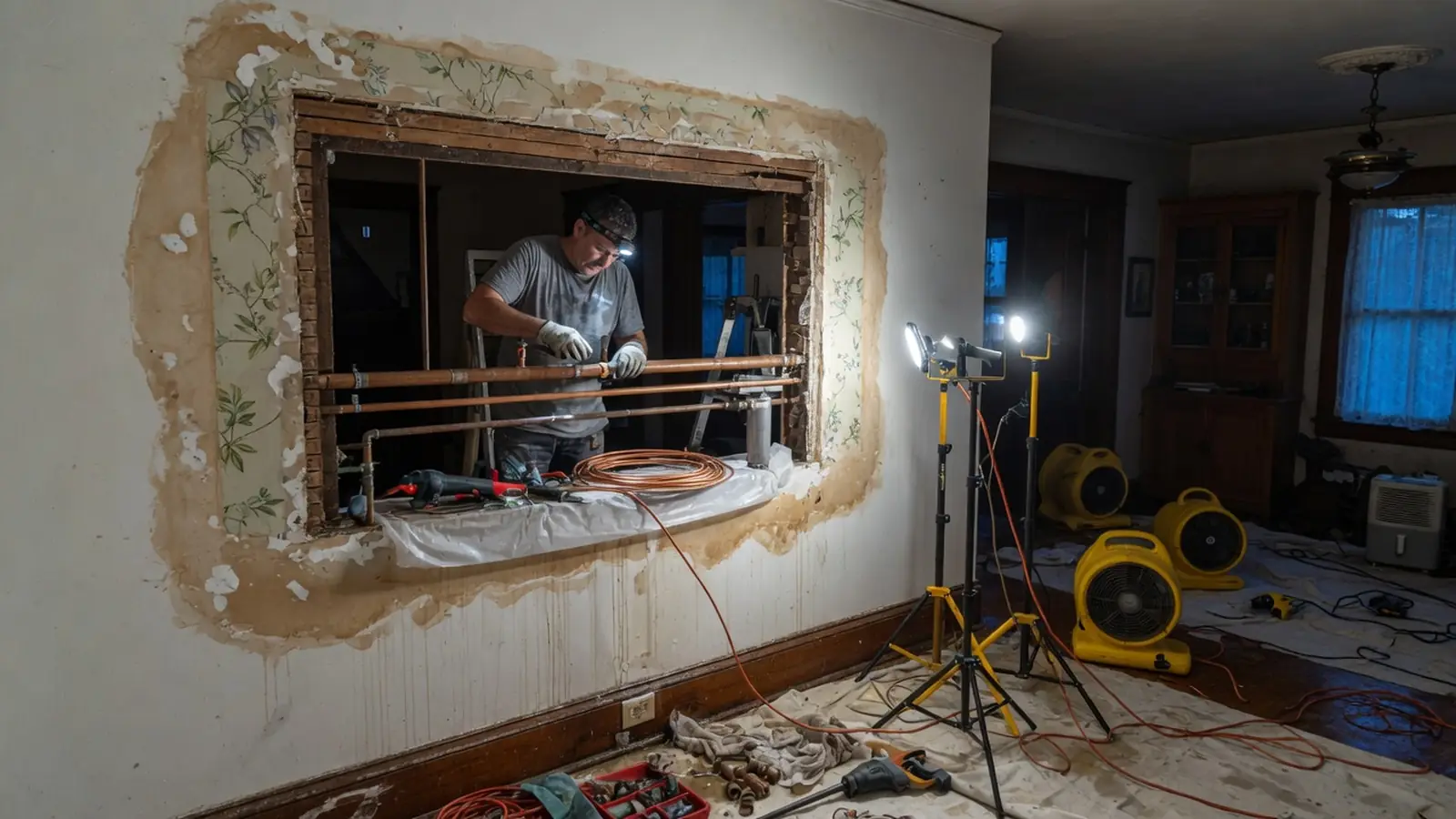
Concord Crawl Space Water
A pattern echoed in public discussions is that moisture evaporating from unsealed crawl spaces migrates into subflooring, causing ground-level hardwood planks to cup and warp. When groundwater or plumbing failures flood the space beneath your home, fast extraction prevents structural framing decay. Our certified technicians rapidly remove pooling water, sanitize soil beds, and install commercial dehumidification equipment.
Close the shutoff, then call (925) 555-0159.
Protecting Foundations And Subflooring
Many older mid-century ranch homes feature vented crawl spaces where winter runoff collects beneath footings and remains trapped against unsealed soil floors.
The median owner-occupied home was built in 1970 (Census ACS 5-year), making aging substructures especially susceptible to recurring drainage accumulation.
Our technicians coordinate comprehensive emergency water damage restoration across residential properties to halt timber degradation immediately.
Homeowners often describe how high summer humidity entering foundation vents fosters widespread surface mold growth across wooden floor joists.
Undetected air handler condensate drain line clogs overflow for weeks, saturating subflooring and promoting heavy mold colonies.
We thoroughly inspect perimeter footings, extract standing water pools, and apply antimicrobial treatments to ensure safe living spaces above.
Every moisture evaluation includes digital psychrometric logging to verify that structural timbers dry back to baseline standards.
How We Dry And Restore Your Crawl Space
Whether addressing routine seepage or resolving severe storm damage from seasonal atmospheric rivers, our systematic workflow restores structural stability from the foundation up.
- Immediate Extraction And Pumping. Submersible trash pumps remove deep pooling while specialized wet-extraction units draw stagnant liquid away from footing trenches and soil depressions.
- Insulation Removal And Sanitization. Elevated crawl space humidity causes subfloor fiberglass batt insulation to absorb water, become heavy, and collapse, requiring controlled removal and antimicrobial sanitization.
- Vapor Barrier And Sump Basin Integration. Pumping standing crawl space water is only a temporary fix if unsealed earthen ground is not addressed with a continuous vapor barrier and a dedicated sump basin.
- Controlled Industrial Dehumidification. Commercial low-grain refrigerant dehumidifiers and axial air movers circulate dry air through framing bays until structural timbers reach safe equilibrium.
Rigorous Moisture Control Protocols
In public forum discussions, homeowners frequently report how sump pump float switch failures during severe thunderstorms allow groundwater to back up and flood crawl space floors. We install reliable dual-switch pumping systems and reinforce earthen floors with durable liners to eliminate recurring moisture threats. When excessive moisture triggers fungal spores on framing members, we partner with specialized protocols for structural mold remediation on wooden subflooring before finalizing your encapsulation.
Standing Water Pumping
High-capacity submersible pumps rapidly clear standing water from perimeter trenches and unsealed earthen floors. We eliminate stagnant water reserves before structural rot or microbial outbreaks spread into joist systems.
Subfloor Structural Drying
Targeted structural drying stabilizes wood framing, sill plates, and subfloor sheathing beneath your living areas. Industrial dehumidification systems pull trapped moisture out of saturated timber assemblies.
Vapor Barrier Encapsulation
Heavy-duty poly sheeting creates an impenetrable barrier between raw earthen soil and floor assemblies. Continuous ground coverage stops subterranean evaporation from warping interior hardwood flooring.
Dedicated Crawl Space Moisture Control And Structural Care
We approach every subfloor water intrusion with methodical inspection protocols, industrial extraction equipment, and durable moisture barrier installations. Property owners receive transparent assessments of timber conditions, focused containment strategies, and reliable craftsmanship tailored to regional ground conditions.
- 8Zip Codes Served
- 7Service Areas
- 3Services Offered
Local property owners depend on our responsive crews to protect structural foundations, eliminate standing water, and stop hidden subfloor moisture issues before permanent damage sets in.
“When groundwater pooled under our subfloor after heavy storms, the crew pumped it dry and installed heavy vapor sheeting within two days. I already passed their contact card to our next-door neighbor who noticed musty odors rising through their floorboards. Their prompt communication and transparent updates made the entire restoration process completely stress-free.”
Marcus T.
“During the water extraction beneath our living room, the team discovered a severed AC condensation line that had been draining into the mud for months. Rather than pausing work or inflating the bill, they repaired the drainage line immediately and continued drying the joists. That straightforward professionalism saved our structural framing from widespread decay.”
Elena R.
“We were four days away from closing our home sale when the buyer's inspector flagged standing water under the ranch foundation. The crew arrived with industrial drying mats and high-volume pumps, eliminating every puddle and bringing moisture readings down ahead of the final walkthrough. Thanks to their rapid response, escrow closed right on schedule.”
Devon K.
“A previous drainage company left torn plastic sheeting and puddles trapped behind poorly placed gravel trenches. This company cleared out the ruined insulation, leveled the trenching, and installed a clean sealed basin with proper discharge piping. They turned an ongoing crawlway nightmare into a clean, bone-dry space.”
Sandra B.
Frequently Asked Questions
How long can standing water remain in a crawl space before floor joists and subflooring suffer irreversible structural rot?
Standing water can initiate irreversible fungal rot and structural wood breakdown within two to four weeks if timbers remain continuously wet. Surface molds form much earlier within 24 to 48 hours, deteriorating indoor air quality long before primary beams lose load capacity.
How do I know if my crawl space has water damage?
Warning signs include musty odors indoors, cupped hardwood flooring, high interior humidity, sagging insulation, and damp foundation walls. Periodic inspections beneath floor joists reveal pooling runoff, rusted pipe hangers, and fungal growth across timber beams.
What causes standing water to collect under local foundations?
Seasonal winter runoff, plumbing supply line leaks, failed sump pumps, and leaking air conditioning condensate drain lines cause crawlway water. Poor exterior lot grading and unsealed earthen floors allow heavy storm runoff to saturate clay soil beds beneath footings.
How long does it take to completely dry a flooded crawl space?
Complete structural drying typically requires three to five days of continuous extraction, heat management, and industrial dehumidification. Subflooring thickness, soil saturation levels, and outdoor humidity influence exact drying timelines.
Will installing a vapor barrier prevent future standing water?
A vapor barrier stops evaporating ground moisture but requires a dedicated sump basin and perimeter drainage to manage standing liquid water. Heavy polyethylene sheeting prevents subterranean vapors from migrating into subfloor framing, maintaining healthy equilibrium.